Quality, testing and documentation
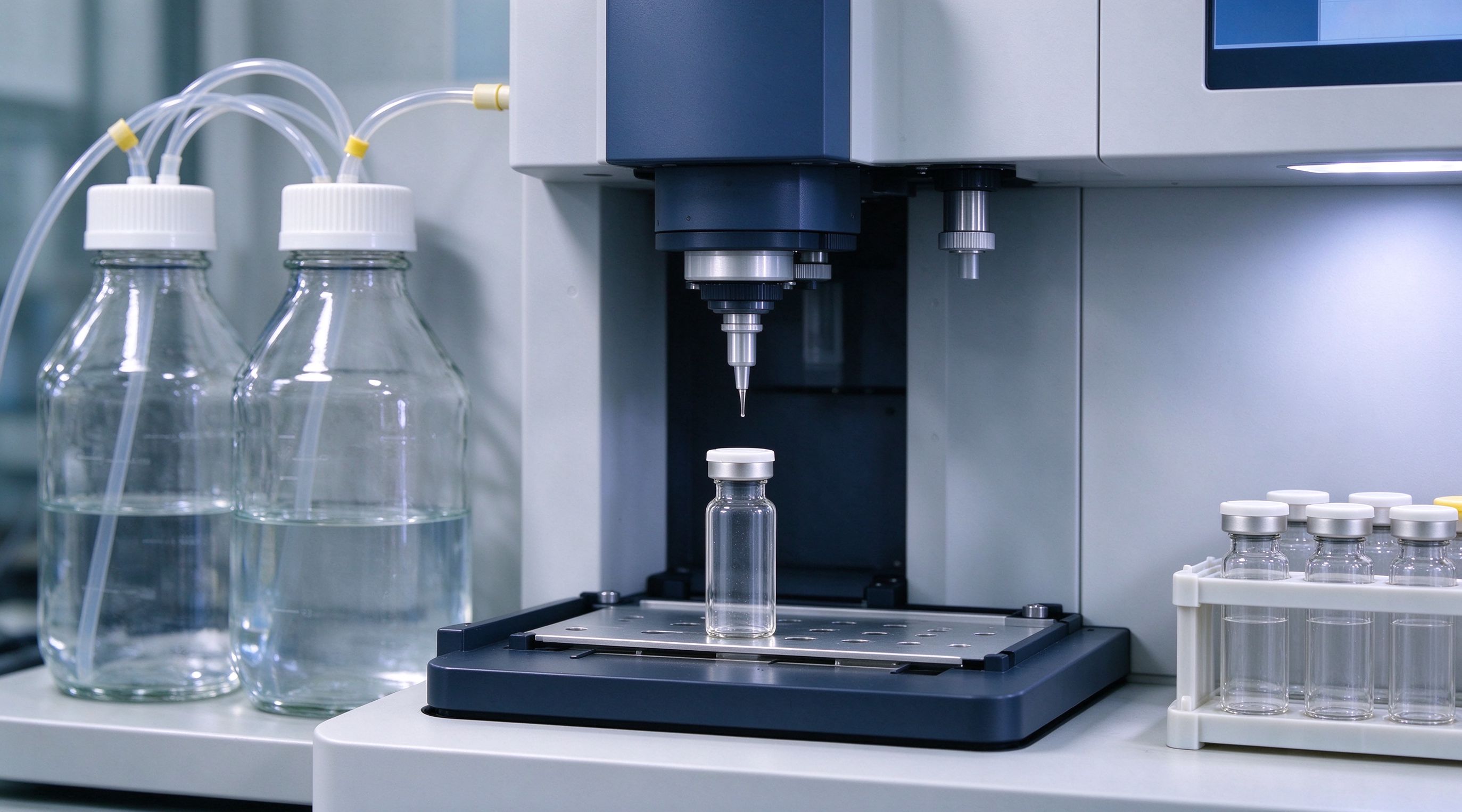
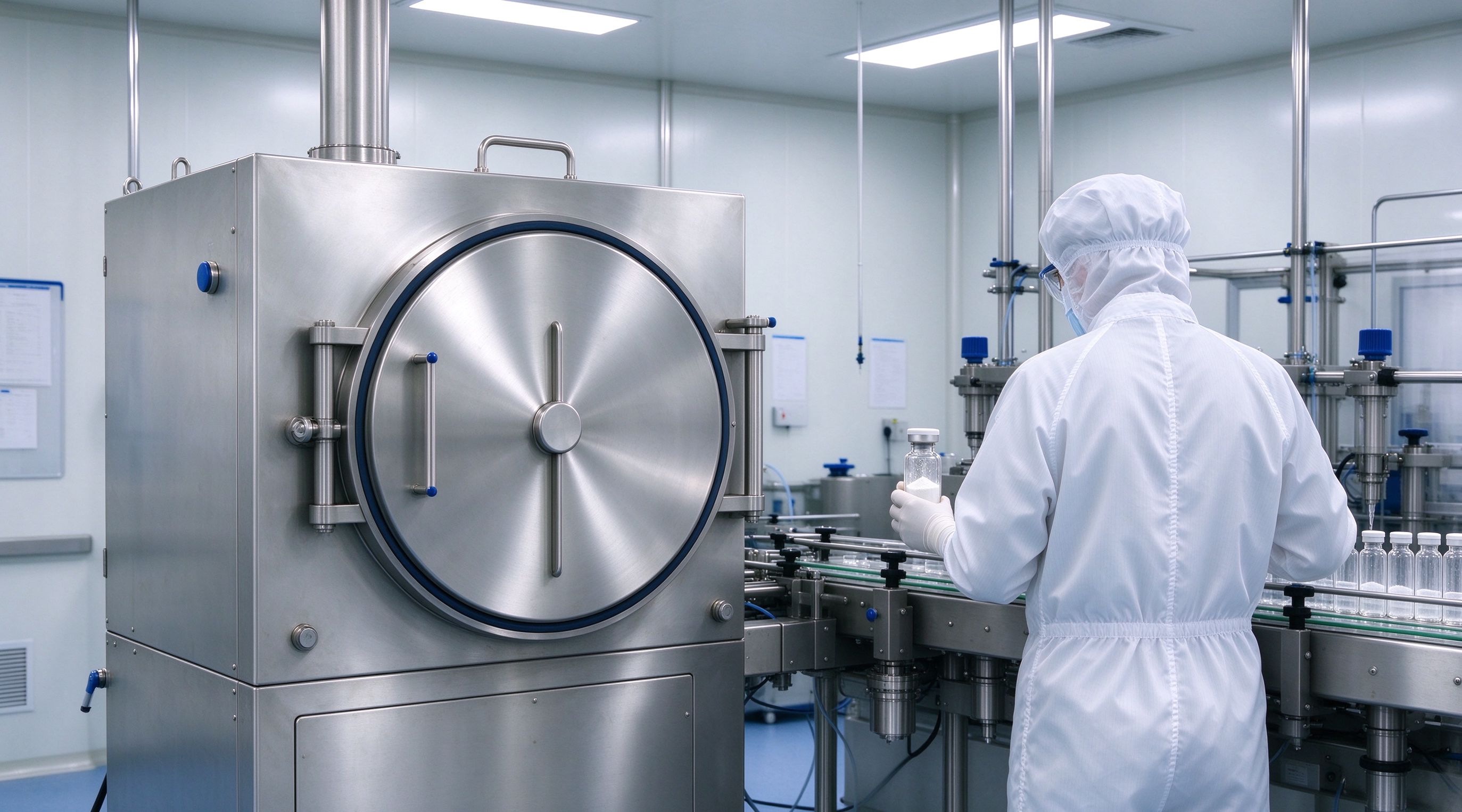
Every lot of research peptide released from our Guangzhou facility passes three checks before it is packed: HPLC purity against a reference standard, mass-spectrometry identity confirmation, and a visual and moisture inspection of the lyophilised cake. A lot that fails any of the three is rejected, not re-labelled.
What testing does each lot go through?
Each lot goes through three release tests. HPLC at 214 nm measures purity against a reference standard and produces a full chromatogram with retention time and impurity profile. Mass spectrometry confirms the observed molecular ion matches the theoretical mass of the intended peptide. A physical inspection then checks cake appearance, vial integrity and residual moisture before the lot is released for sale.
How do I read an HPLC chromatogram?
An HPLC chromatogram plots detector response against retention time. The large peak at the expected retention time is the target peptide; every smaller peak is an impurity or a solvent artefact. The purity figure is the target peak's area divided by total peak area, expressed as a percentage, so a chromatogram labelled 98.4% means 1.6% of the detected signal came from everything else.
Three things are worth checking on any supplier's trace: whether the full run is shown rather than a cropped window around the main peak, whether the y-axis scale is normalised so small impurities are not hidden, and whether a reference standard injection appears in the same run. A trace with all three is auditable; a screenshot of one peak is not.
What is in the COA pack?
The pack contains a one-page certificate of analysis and two supporting traces. The certificate carries the batch number, product name, strength, test methods, appearance, water content, purity result and release date; the supporting traces are the HPLC chromatogram and the mass-spectrum. All three are issued per lot, so the batch number on the paperwork matches the batch printed on each vial in the box.
How are peptides stored and shipped?
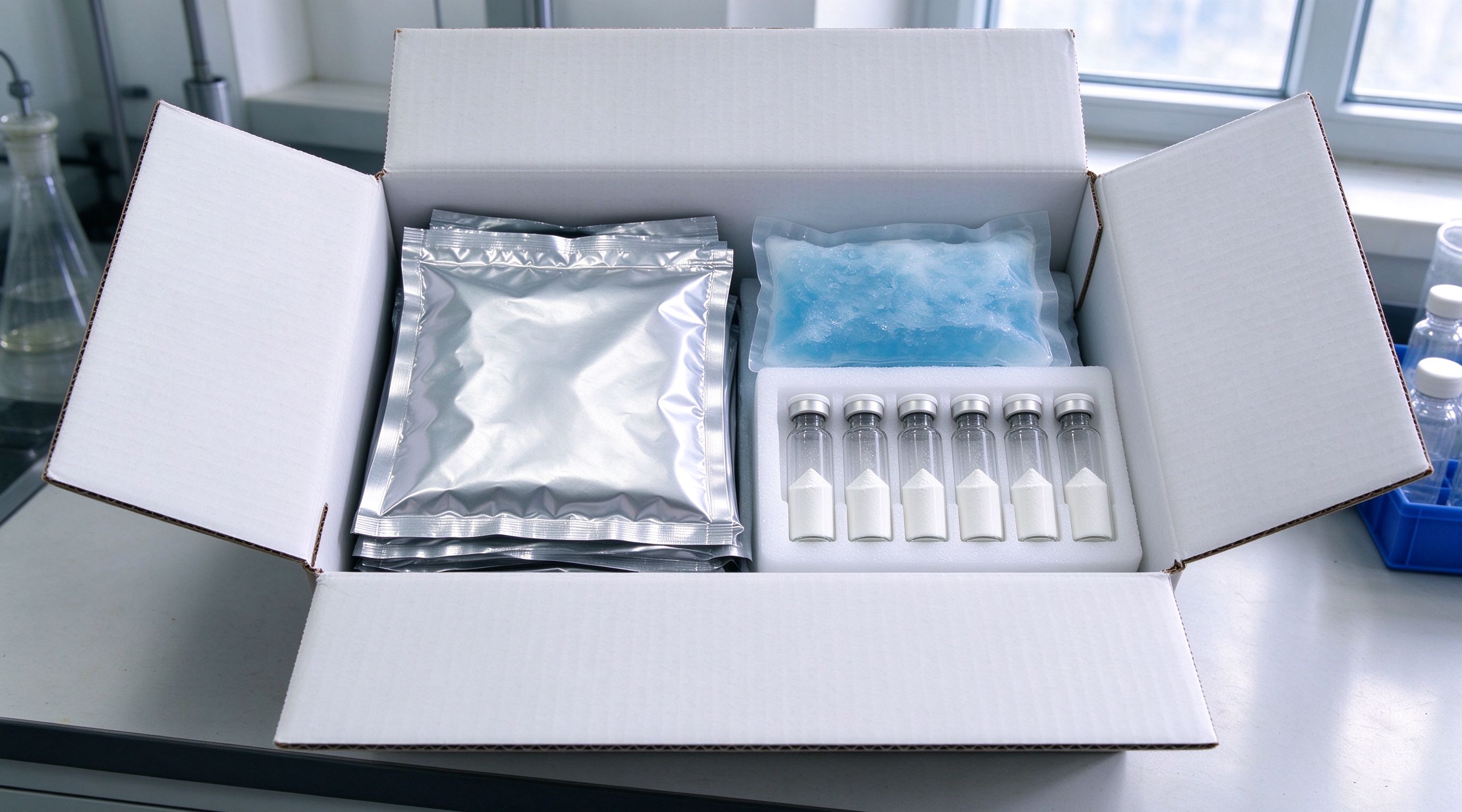
Lyophilised peptide is held at −20 °C from release until dispatch, then packed according to the compound's stability profile. Temperature-sensitive lines such as HGH and diluents travel with gel ice and insulated pouches; the rest travel ambient in foil pouches inside a rigid outer carton. Transit is typically 4–8 working days to the US and EU.
What happens if a lot fails?
A failed lot is held, not sold at a discount. If a buyer's own testing contradicts our COA on a delivered box, the retained sample from the same lot is re-tested in Guangzhou and the result decides the outcome: a confirmed deviation is replaced or credited in full, and the cost of the return shipping is carried by us.